Pages

Wednesday, January 23, 2019

And the Mock Geisel goes to...


Fox is Late by Corey R Tabor wins Mock Geisel gold this year!

Our honor books are:


Fox + Chick: The Party + Other Stories by Sergio Ruzzier
A Parade of Elephants by Kevin Henkes
See Zip Zap by David Milgrim
Tiger Vs. Nightmare by Emily Tetri
 
It was an interesting year in Mock Geisel results.  As you can see from this screenshot, if we were the Real Committee, we would have had to do at least one more ballot to determine our winner -- although Fox is Late had the highest number of first-place votes as well as the highest total points, there was not enough of a margin between it and Fox + Chick to satisfy the official rules.  However, the results are certainly decisive enough for the purposes of this blog! 


We had several different options for selecting honor books. We could have given an honor only to Fox + Chick, but would that have done justice to the many other distinguished titles on our ballot? In the end, we decided that four honors recognized the broad spectrum of books for beginning readers.

Congratulations to the talented author/illustrators represented above!  Will any of them go on to be recognized by the 2019 Geisel Committee? We'll know in a few days -- the ALA Youth Media Awards announcement begins at 8:00 A.M. (Pacific Time) on Monday, January 28th. Check back here after the awards announcement for our reactions to the news!

Tuesday, January 15, 2019

Ballot #2 + A Quick Discussion

It's time for a second mock ballot (at the bottom of this post)! Why? Because the results of the first ballot simply too close to call. According to the Geisel Award Manual:

There is a formula to determine the winner. A book must receive at least four first place votes at four points per vote for a total of at least 16 points. In addition, that book must have a four-point lead over the book receiving the next highest number of points.

In our mock Tiger vs. Nightmare had enough first place votes (4), but didn't have the required four-point lead over the title with the next highest number of points (A Parade of Elephants with 38). 

Tally for Ballot #1
So what next? The manual says:

If the first ballot does not produce a winner, the committee follows procedures for re-balloting.

The committee may not proceed to another ballot without a second round of book discussion. At this point, certain choices present themselves, and certain procedures apply: 
  • By consensus the committee may choose to withdraw from the discussion list all books that received no votes on the first ballot. 
  • By consensus the committee may choose to withdraw additional books that received minimal support on the first ballot. 
  • Once withdrawn from the discussion list, a book is permanently eliminated from consideration for the award. 
  • Once a second round of discussion is complete, the committee proceeds to a second ballot.  

In the case of our mock, we've decided to eliminate 5 titles because their final point tally was much lower than the 7 titles (highlighted in purple) at the top of the heap. If we were on the real committee, we'd discuss and re-ballot as many times as necessary to select a winner and then honor titles (if any). However, in the case of this mock, we'll just re-ballot once and hope a clear winner and honor titles emerge. 

You might have noticed that the manual states, “The committee may not proceed to another ballot without a second round of book discussion.” Wouldn't it be great if we could sit around a table together a discuss our 7 remaining books? We'd love to know your appreciations and concerns for each titles. But since time and space won't allow that, we encourage you to champion your favorites in the comments below. A short couple of sentences on the strengths of each of title is included below. We hope you'll also take a moment to re-read titles or delve into a review or two before casting your vote. This ballot will be open until Midnight on Tuesday, January 22nd.   

Kick It, Mo! by David A. Adler, illus. by Sam Ricks
I'll be honest, I'm a sucker for a Mo Jackson book. Don't Throw It to Mo! won the year Amanda, Misti, and I were on the Geisel Award Committee. But beyond that, I think there's excellent word repetition and white space. I get asked for soccer books all the time at my library, so I think it has definite cover appeal. 

A Parade of Elephants by Kevin Henkes
The only picture book in our top 7, the pastel colors and soft edges of Henkes' elephants seem like they would appeal to the younger side of the K-2nd age range. As usual, Henkes has picked a wonderful font with stick-and-ball a's and just-like-kids-learn-to-write-them g's. 

See Zip Zap by David Milgrim
Go, Otto, Go! took home a Geisel honor in 2017, could a second honor or even a win be on the horizon for Milgrim? With hilarious repetition and an alien-filled story, it just might happen! 

One of two true graphic novels on this mock ballot (My Friends Make Me Happy has speech bubbles, but is being marketed as a beginning reader), the sophisticated artwork and snarky humor make this book a stand out. 

Fox is Late by Corey R. Tabor
Of the two Fox books by Tabor this year, this one is my favorite (Although I love Fox the Tiger quite a bit as well). Short, declarative sentences are paired with enticing illustrations. This one has an undeniable page-turning dynamic as Fox skates from one page to the next. 

Tiger vs. Nightmare by Emily Tetri
The lush watercolor illustrations in this graphic novel are definitely some of the strongest illustrations in our final 7. It's clearly for more experienced readers though, so I think it depends on if you feel it falls within the K-2nd age range or if it's a tad higher. 
Speech bubbles, oh, how beginning readers love speech bubbles! I love that the cover of this book screams, "Open me! I'm funny!" 


Create your own user feedback survey

Thursday, January 10, 2019

Excellence in Ineligible Titles

This year there are a number of delightful beginning readers that, if they were eligible, would be strong contenders. Alas, page limits and the pesky requirement that both author and illustrator be United States residents or citizens rules out many a title. The following are, by our estimation, ineligible* for the Geisel but still deserving of your attention and of being shared widely with young readers.

Meet Yasmin - This new series has so much to recommend it - the confident Yasmin celebrating creativity and problem-solving in a way that feels fresh, her Pakistani American extended family (and an Urdu glossary to help readers unfamiliar with the language to follow along). Each individual story is just the right length for a beginning reader, and we’ll be looking forward to the future adventures of Yasmin.

Peter and Ernesto - Anna Taylor did a great write-up of Peter and Ernesto’s strengths here. The facial expressions of the duo as they pursue their great adventures infuse a lot of feeling into a story written at a beginning reader level.

Space Cows - Engaging illustrations of the wacky rhyming descriptions in the text make this an appropriate pick for early beginning readers. Recommended for young fans who will giggle at the premise, or anyone ready to embrace the absurdity of Space Cows.

Chicken on Vacation - Zoey the Chicken takes two of her more literal-minded friends on an imaginative vacation, recasting their experiences on the farm as a beach vacation complete with treasure hunt. More confident readers will enjoy Zoey’s flights of fancy, but as they differ from the reality depicted in the illustrations will need to already be familiar with the vocabulary. A celebration of imagination and creativity.

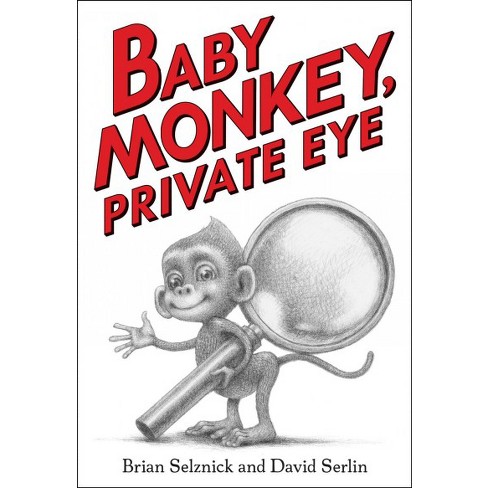
Baby Monkey, Private Eye - Selznick and Serlin push the beginning reader format into new territory in this animal mystery. At 191 pages it far exceeds the Geisel page limit criteria, however strong word repetition and visual clues, plus a wonderful page-turning dynamic provide support for more confident developing readers. Although there’s much to appreciate about this title, there has also been discussion around the problematic depictions of monkeys and apes in children’s literature.

*Note that we are only privy to what information we can find in author and illustrator bios in the books themselves or on their websites. If the Real Committee has questions about eligibility, they may work with their ALSC liaison to discreetly look into the matter further. As bloggers, we’re just making our best guess based on the information at hand and would be thrilled if one of the titles above was determined eligible by the committee after all and was deemed worthy of the Geisel Award.


Monday, January 7, 2019

Cast Your Ballot for the 2019 Guessing Geisel Mock!

Now's your chance to cast your ballot for Guessing Geisel's Mock! As they do on the real committee, we'll be weighting the responses with 4 points for each first choice vote, 3 points for each second choice vote, and 2 points for each third choice vote.

This ballot will stay open January 7th-14th. Please, complete only one ballot per person. 

This year we have narrowed down our ballot to just 12 titles. Our hope is that a smaller number of titles on the ballot will encourage more participation. However, if your favorite is not on the ballot, we invite you to write it in. We'll include all write in titles in our announcement post. 

It's not required that you have read all books to participate, although we recommend reading as many as possible, and reading reviews here and elsewhere. We are open to the possibility that we, just like the real committee, may have a clear winner after a first ballot, in which case we'll stop there and announce our results. 

If the first ballot does not produce a clear winner, we’ll conduct a second ballot from January 15th-21st. The real committee would keep going until they met the criteria for determining a winner, but we will stop after our second ballot and determine our winners. We invite you to join us for this virtual Mock Geisel with the hope that you’ll discover some new favorites for beginning readers. 

For more about the real committee's process and the benefits of mocking, take a look at our Let's Get Ready to Mock post from last year.

Create your own user feedback survey

Wednesday, January 2, 2019

More Geisel Contenders (That We Didn't Have Time to Write About)

As the Youth Media Awards approach, we here at Guessing Geisel realize that, despite our best efforts, there are still contenders that we just didn't have time to cover. It's not that we didn't like these books, it's just that we simply ran out of time! So today's post attempts to give the titles we missed a place to shine. 

What else did we miss? Leave a comment and let us know!


Buster the Very Shy Dog, More Adventures with Phoebe by Lisze Bechtold 
In the fourth series title, Buster the dog and his canine companion Phoebe tell two stories of everyday doggy life. Meant for more confident readers, the sentences are longer (8+ words) and there's less leading (space) between lines of text. The illustrations are appealing and friendly, but the plots are rather slight and not as memorable or engaging as one would hope.

King & Kayla and the Case of the Lost Tooth by Dori Hillestad Butler, illus. by Nancy Meyers
King and his human owner Kayla solve their fourth case together. The appeal of a story told from a food-loving dog's point of view, plus the detective elements of this title could be a winning combination, as Brian Wilson considered so thoughtfully in last year's post about the series. Plus, King & Kayla and the Case of the Missing Dog Treats took home a Geisel honor last year, so perhaps the Butler and Meyers have another winner or honor in their future. 

You Should Meet Lin-Manuel Miranda by Laurie Calkhoven, illus. by Alyssa Petersen 
Could this beginning reader trim sized biography win the Geisel? That would certainly be a first! The subject himself is quite popular, which could entice many a reader. However, the large blocks of texts, long sentences, and vast vocabulary could be challenging to even the upper range of the Geisel criteria.

Good Dog by Cori Doerrfeld
Although we didn't cover this title in a standalone post, it was included in the What Kids Say - October 2018 post. As our child and grown up contributors noted, the strength of this title is the sheer cuteness of the dogs and the comforting tone of the book. For the very newest reader, this picture book has a lot to offer. 


My Pillow Keeps Moving by Laura Gehl, illus. by Christopher Weyant
In this hilarious picture book illustrated by Geisel winner Christopher Weyant (You are (Not) Small, 2015) a man accidentally buys a dog instead of a pillow. Wordless spreads and sequential illustrations help to tell the story visually. However, there is a fair amount of text used in the illustrations (window signs, for instance) that could be confusing to new readers because of the orientation (curved, slanted, etc.) and the use of all caps. 


Rocket the Brave by Tad Hill
Rocket, of picture book and beginning reader fame, is back in a gentle story about courage and curiosity. Using just 50 unique words, the repetition in this title is quite strong. The illustrations, featuring a lush forest of greens and browns rendered in colored pencil and acrylic paint, provide helpful visual context clues. Finally, Rocket's movement from left to right throughout the story create a gentle, yet insistent page-turning dynamic. 

Infamous Ratsos: Project Fluffy by Kara LaReau, illus. by Matt Myers 
Louie and Ralphie Ratso take on love, poetry, and friendship in the third book of the series. No strangers to the Geisel, the first Infamous Ratsos title took home a Geisel honor in 2017. As with the previous installments, Project Fluffy manages to hit the 96 page limit exactly. Could this series snag another Geisel nod? That all depends on how the committee interprets the criteria. Specifically, how difficult a text they feel a second grader can successfully navigate. 

Jack and Jill and T-Ball Bill by Terry Pierce, illus. by Sue DiCicco 
Reviving the three main characters from 2002's Jack and Jill and Big Dog Bill, this sports story has a lot of supportive features for new readers: short sentences, large font, ample white space. Although there's some urgency to the plot, overall it may lack the page-turning dynamic sought after by the committee.


Tiger vs. Nightmare by Emily Tetri 
We didn't exactly miss this one, we just decided to write about it's potential for a Geisel-Caldecott double whammy in a guest post for Calling Caldecott. We also covered it in our What Kids Say December post


Monday, December 31, 2018

What Kids Say - December 2018

Thanks to everyone who’s been following along with this series this year. This is the last What Kids Say post of 2018, but I’m excited to say that it’ll be coming back in 2019! Read more about this series in the inaugural post. 

This is how it works. Each month I send a list of four contenders to a half dozen of our guest contributors that are caregivers of or regularly work with K-2nd grade students. I do my best to select a variety of levels and topics for readers at different stages of the learning to read process. The focus of this series is on the experiences and observations from kid readers and their grown-up contributors.

A big shout out to Jamie Chowning and DaNae Leu for all their hard work sharing, observing, and collecting feedback from the kids in their lives. This time approximately 80 first and second graders participated. About 20 kids read each title and most kids read just one of the titles, mostly because there was a limited time frame for reading.

I Want to Be a Doctor 
book cover
I Want to Be a Doctor by Laura Driscoll, illus. by Catalina Echeverri 
Recently, guest blogger Liesel Schmidt wrote about this community helper contender. For this series, 23 kids read this title with over half of them giving it the top ranking of 5 stars.

The plot was the major discussion point for most kids. Many of the comments they wrote on their feedback sheets mentioned plot points. One reader summed up the whole book, “Somewone got hert and they got beter” [sic]. “The dokdors” [sic], as one kid wrote, were a highlight for several kids (interestingly, Doctor proved to be a tough word for three readers). Another reader mentioned they liked the x-ray machine. Several kids mentioned that this was a fun book.

On the other hand, many kids lamented Jack’s broken foot and pointed to it as the thing they didn’t like about the book, “his feet brok” [sic], “I like it all I don’t like it when Jakc bokn his foot” [sic], “I did not like win he fle oof the bed” [sic]. There were also a number of tricky words that tripped up readers:
  • Mrs. Lopez 
  • Dr. Lopez 
  • Machine 
  • Loosen 
  • Shrug 
  • Doctor 
  • Want 
  • Where 
Only one reader commented on the illustrations, saying “I liked how the pictchrs are dran!” followed by about a zillion exclamation points. (see image).
Thanks to DaNae Leu for 
gathering this feedback!
One grown up contributor noted that this title was finished by most 2nd graders in the allotted time and seemed to be liked well enough, but the grown up didn’t notice any gushing. This seems like an accurate summation of a series that's meant to introduce concepts, but lacks that all important page-turning dynamic sought by the Geisel Committee.

See Pip Flap book cover
See Pip Flap by David Milgrim 
28 kids read what one grown up contributor called the “safest bet” of this month’s four titles. The contributor noted that the book was, “Too easy for some, just right for others.” Readers were excited to hear there were additional Adventures of Otto titles, and nearly all of them liked the book and found it easy to follow. Even the handful of kids who said they wouldn’t want to read this title again, said they would read a sequel.

Backing up our contributors observations, there were just a handful of challenging words-- Otto, Pip, Flap, Fly. However, Milgrim’s intentional repetition throughout means that even though kids struggled initially, they were given plenty of opportunities to practice and gain confidence with these words.

Overall, this book seemed like a solid hit for many kids. One reader even felt it was too short! Here's a sampling of their comments:
  • “It was funny and fun.” 
  • “Flap flap flap flap flap flap flap flap flap flap flap flap.” 
  • “Robot I like.” [sic] 
  • “The mouse was triinge to fly” [sic] 
  • “I liked that whe pip flew high in the sky” [sic] 

Tiger vs. Nightmare 
book cover
Tiger vs. Nightmare by Emily Tetri 
This graphic novel was read by 41 kids with three quarters of them giving it 5 stars out of 5. As both our grown up contributors this month mentioned, this 64-page title falls towards the upper end of the K-2nd Geisel range.

One grown up contributor noted the cover appeal of this title. The Geisel is notable among ALSC awards as being the only award to take kid appeal, including whether or not the cover makes them want to read the book, into account in final discussions.

The story itself seemed to be engaging for most readers. Some kids loved the scary parts--“I like it because I like monsters and I like when the monster has a sword and shield ... And there was fighting.--while others found those parts too skeree” [sic]. One grown up contributor wrote, “As an adult, I was seeing a sweet friendship and teamwork story. I was surprised that my older child found it scary, because he doesn't strike me as easily frightened in general, but he did. As a librarian, on the strength of his opinion, I would ask if the child liked scary stories before recommending it. It's a great find for those (like my younger child) who do!”

Many kids needed help 1-5 times sounding out words, including the following words noted as difficult:
  • Helping 
  • Did 
  • Ummmm 
  • Nightmare 
  • Oooo 
  • Yummy 
  • Thanks 
  • Curry 
  • Sure 
  • Monster 
  • Leave 
  • Terrible 
Notably, a few kids mentioned that they didn’t like the fact that some pages didn’t have words.

Positive comments included:
  • “The monster” 
  • “The words” 
  • “I like the starting” 
  • “Funny” 
  • “It was fun to read. I loved it.” 

Will this graphic novel garners Geisel love this year? That could depend on how much weight the committee places in kid and cover appeal, as well as how they interpret the criteria regarding age range.

Unlimited Squirrels in 
I Lost My Tooth
 book cover
Unlimited Squirrels in I Lost My Tooth by Mo Willems 
Out of the 65 kids who read this book, the first in a new Mo Willems series, only 16 of those kids gave it fewer than 5 stars out of 5. It would seem that Willems’s reputation precedes him. A grown up contributor shared that this book was enjoyed by most, and yet “finished by few in the time allotted.” Many kids were excited by thoughts of a sequel. One even suggested a title: Unlimited Squirrels in Shark Time.

Kids were effusive in their feedback:
  • It has facts.
  • “They think the tooth is a baby”
  • “That it was funny!! Ha ha ha”
  • “It was kind of like a activddy it was really fun.” [sic]
  • “I like wen they scremd” [sic]
  • “It was soooo funny. I would give it 10000 stars.”
  • “We will take it from here zoomy.”

The word play was both a pro and con, depending on the child. One grown up contributor observed, “The vocabulary isn't all that challenging, especially in the main story, but we enjoyed it as a change to practice with wordplay.” However, there were a number of challenging words for other kids:
  • Describe 
  • Emote Acorn 
  • Away 
  • Tooth 
  • Loose 
  • Direction 

Squirrel was cited as difficult to sound out by 9 kids, more than any other word in any book this month. Readers spelled squirrel as “sthrabares” and “squlrr”, further illustrating that this is a tough word! The squirrels also showed up in the comments about what kids didn’t like:
  • “How the squirrels talked”
  • “To menee wrds but it was still fun” [sic]
  • “It had to many squirrels” [sic]

Could this series be the start of more Geisel love for Mo Willems books? It would seem that the sheer enthusiasm for this title could give it an extra push on the discussion table, however the difficulty of the word “squirrel” alone could give committee members pause.

----------------------------------------------------------------------------------------------------------------------------------------------------------------- 
So that’s what kids have to say this month! What are your kids saying about these books? Let us know in the comments. We also invite you to share kid feedback on any of this year's contenders in this comments section of the title's post.  

Friday, December 28, 2018

I Want to Be... series by Laura Driscoll

Liesel Schmidt is a children's librarian at Denver Public Library's Central Library. She enjoys exploring the wonders of the world alongside kids of all kinds.


Cover image: I Want to Be a DoctorCover image: I Want to Be a Police OfficerCover image: I Want to Be a Veterinarian


These three books in the My Community subset of the I Can Read! Series blend narrative with nonfiction elements to explore the careers of a variety of community helpers. Each book begins with a different child expressing curiosity about the job of a person in their community. Then, each book goes on to explore a variety of different job titles within each profession. For instance, after encountering an emergency room doctor in I Want to Be a Doctor, the young narrator learns about specific types of doctors who perform X-rays, fix bones, help newborn babies and more.

I Want to Be a Doctor, I Want to Be a Police Officer, and I Want to Be a Veterinarian are all well-made contributions to the community helpers category. All titles feature an appealing cast of diverse primary and secondary characters, including gender, race and ability diversity. A clear, consistent typeface is used, with generous leading providing space between the lines so that new readers can focus easily. Vocabulary is straightforward and made up predominantly of high frequency words. Glossaries at the back of each volume give more specific definitions of each job (A police detective "tries to find all the facts about a crime," etc.). Still, these books may excel in their category, but how do they stack up against other Geisel contenders?

Driscoll's I Want to Be books combine fiction and nonfiction to introduce new information about professions in the community. When introducing new information, excellent books for beginning readers provide supports for learners through text and illustration--and it is in this area that these books are lacking. Although sentences are short and concepts simple, more difficult vocabulary is included, sometimes without significant support. The word "veterinarian" is introduced on the first page of I Want to Be A Veterinarian, after which the word "vet" is used in its place without explanation until page 20, when "veterinarian" is used again. In I Want to Be a Doctor, the word "emergency" is used once in the context of an emergency room, but then is not repeated or defined. These three books also utilize turns of phrase and abbreviations that may be difficult for a new reader. In I Want to Be a Police Officer, Driscoll mentions ID cards, without defining the term or explaining what ID means. In that same book, Driscoll refers to a K-9 unit without explanation.

Although Driscoll's I Want to Be books stand out from their counterparts in their engaging diversity and appealing narrators, they are missing some beginning reader supports that would make them first picks for the Geisel award. Still, look to these books for cheerful introductions to community helpers.

Note: Librarians at Oakland Public Library produced a guide to Evaluating Children's Books about Police. The ideas presented in that guide may provide a useful rubric for examining I Want to Be a Police Officer.