Pages

Showing posts sorted by relevance for query #wndb. Sort by date Show all posts

Monday, December 9, 2019

#WNDB - Still Important

As we’ve discussed in previous #WNDB posts, the world of beginning readers is incredibly homogeneous. And what’s more, there are more books about animal and inanimate object protagonists than there are about human kids from diverse backgrounds. This year alone there are beginning readers featuring: 

  • Mice 
  • Fish 
  • Hedgehogs 
  • Squirrels 
  • Rabbits 
  • Hot dogs 
  • Beans 
  • Robots 
  • Invertebrates 
  • A brain with smelly feet 
  • Pasta 

Not to mention the plethora of beginning readers that feature protagonists that are assumed white.   

I’m not saying any of these books shouldn’t exist. There are reasons to love each and every one of them individually. But when we look at them as a whole, it’s obvious that #WeSTILLNeedDiverseBeginningReaders. Because what we don’t see (or see very little of) in this year’s Geisel contenders are representations of characters with diverse abilities, family structures, socio-economic situations, cultural backgrounds, as well as any representations of LGBTQIA+ characters and hardly any #ownvoices books. 

Why is this so important? In two words, reading motivation. As Gigi Pagliarulo wrote in a post from earlier this year, “This reading motivation comes from several areas, including choice and personal relevance. Kids who can self-select books that reflect their interests and life experiences demonstrate more reading motivation. This is where diversity and equity in beginning readers come into play.” Being able to hand a kid a book with a character that reflects their experience is affirming and validating. And for kids from dominant cultures, reading a book with a protagonist from a non-dominant culture widens their view of the world and subverts the idea that stories/life are centered around dominant culture experiences and stories. 

One book/series about a particular diverse representation isn’t enough. We need lots of books with diverse representations at all stages of the learning to read process. As Amanda Foulk wrote in a post from last year, “There’s room on our shelves for so many more types of readers to see themselves reflected at every age and stage of learning to read.” We need to be able to give kids stacks of books that provide windows, mirrors, and sliding glass doors. We cannot and should not expect a handful of books to pull that weight. 

I appreciate books like Charlie & Mouse, King & Kayla, Ana & Andrew, Katie Woo, Ling & Ting, Meet Yasmin (although this last series is sadly not eligible for the Geisel). And I encourage our readers to champion for more diverse beginning reader titles. As Danielle Jones said in an earlier post, “The Geisel Award should be for all children, but a book has to be published for it to have a chance. Many children have yet to see themselves represented in this format. This has to change.” 

Wondering what you can do to champion this cause? Take a look at the three actionable steps Gigi laid out in her post.

Monday, October 15, 2018

#WNDB: #OwnVoices

Photo courtesy of Gigi Pagliarulo
This week's contributor is Gigi Pagliarulo, a librarian for the Denver Public Library. Gigi is especially interested in youth services, early literacy, and issues of diversity and multiculturalism within children's literature and programming, has served on the steering committee of Colorado Libraries for Early Literacy, and the CLEL Bell Picture Book Award Selection Committee. 

Hello, dear Geisel Guessers, and welcome to Fall 2018, where the issues of representation, equity, and authenticity are more present and more pressing than ever. I’ve been writing this blog yearly since 2016, exploring and working to evolve with these ideas as our understanding of the need for more diverse representation in literature grows. In prior years I’ve discussed the #WeNeedDiverseBooks and #EverydayDiversity movements, and how they relate to beginning readers. Today I’d like to discuss another crucial step forward in the drive towards equality, the #OwnVoices movement.

In 2015, young adult author Corinne Duyvis created the hashtag #OwnVoices on Twitter to highlight children’s and young adult literature where the main character(s) and creators share the same diverse/marginalized identity, as defined by #WNDB. In addition, portrayals of marginalized experiences are also essential for furthering authenticity and equity.

The need for the movement is twofold: first, stories of marginalized groups by majority-group authors have frequently been, as Kayla Whaley writes for Brightly, “rife with stereotypes, tropes, and harmful portrayals”, and even when they are stereotype-free, can never reach the true “nuance and authority that comes with writing from lived experience.” In addition, authors and illustrators from marginalized communities have been deeply oppressed by persistent institutional bias in the publishing industry, struggling to get their voices heard while their own stories are co-opted, inauthentically portrayed, and turned into damaging stereotypes. Year after year, research has found that the numbers of diverse characters, creators, and members of the publishing industry are inequitable.

While the genre of beginning readers is one known more for Everyday Diversity than specific portrayals of marginalized experiences, and yet the need for a multitude of diverse stories to be told and characters portrayed authentically, free from harmful representations and with appropriate nuance is something that children learning to read need as desperately as the rest of the reading (and pre-reading!) population. It can never be said enough: all people, particularly children and particularly children from marginalized groups, need to see themselves accurately portrayed in books, and creatorship has a vital role to play.

Librarian Amy Forrester, one of the excellent editors of this blog, performed a diversity audit of the early books and transitional readers in her large public library system’s collection. The results are more than sobering, and #OwnVoices author and illustratorship are among the lowest representation out there: “a scant 1% of Early Books authors and illustrators (that's combining them together) are OwnVoices.”

Publishers need to know that we—parents, librarians, teachers, and most importantly, kids, want to read more #OwnVoices stories across all genres. Consider letting some of the major publishers of beginning readers know how you feel! Here are three ways to take action to let publishers know you want more #OwnVoices titles:

  • Going to a library conference? Stop by publisher booths and ask a rep for their favorite upcoming #OwnVoices titles. 
  • If you do any purchasing at your library, contact your vendor and publisher reps and ask specifically for #OwnVoices. 
  • Use social media to cheer on publishers who put out #OwnVoices titles, and let them you know want more.

In the meantime, please seek out some of the few #OwnVoices beginning reader titles that Amy and her team identified.

Tony Dungy and Lauren Dungy Ready-to-Reads, illustrated by Vanessa Brantley Newton


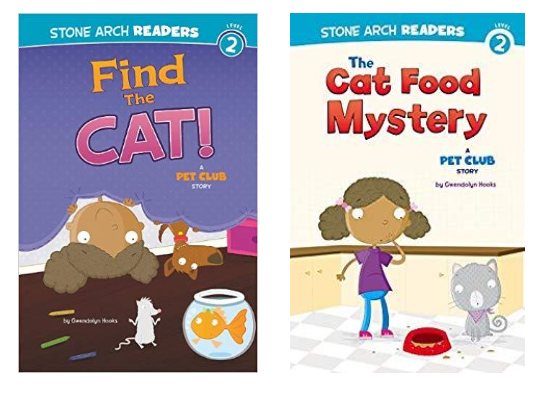
Find the Cat and The Cat Food Mystery by Gwendolyn Hooks, illustrated by Mike Byrne

Moving Day by Anthony C. Brandon, illustrated by Wong Herbert Yee

My Favorite Foods by Dana Meachen Rau, illustrated by Grace Lin

Ready? Set. Raymond! By Vaunda Micheaux Nelson, illustrated by Derek Anderson

Wednesday, August 15, 2018

#WNDB: Disability Representation

Danielle Jones is a youth and teen librarian in Portland, Oregon. She has served on the 2018 Sibert Committee and the 2016 ALSC Notable Children’s Books Committee.

The Geisel Award’s stated purpose is to honor books that “through their literary and artistic achievements, demonstrate creativity and imagination to engage children in reading.” All children deserve to be a part of this audience that we are trying to engage, and readers are more likely to be engaged in a book where they see themselves represented.

The Condition of Education 2016 report from the National Center for Education Statistics (NCES) shows that in 2013–14, there were 6.5 million students (13% of students) receiving special education services. Among students receiving special education services, 35 percent had specific learning disabilities. By fourth grade, on average, children with disabilities are reading below grade level. Representation in books should be considered a factor. Having books that serve as mirrors would not only have personal importance, but by engaging the reader, such books could lead to greater reading success. With their controlled vocabulary, beginning reading books are tools that are often used with struggling readers, readers reading below grade level, and students with learning disabilities.

So where are the beginning reading books with characters with disabilities?

I have yet to find a reader that features a main character with a disability. There are some books that show a character in a group shot or in the background in a wheelchair, but none show a prominent character with a disability.

Emerging readers are often drawn to series, as they find their formulas comforting in their predictability as they build their reading skills. Series often feature two buddies that can have multiple adventures, lending themselves to a series format. It must be assumed that book creators must consider that characters with a disabilities won’t fit that formula. It is beyond time for this kind of thinking to be disrupted.

Part of the Geisel criteria is that “subject matter must be intriguing enough to motivate the child to read.” Children at this age and developmental stage are building awareness of their world and communities. Inclusive and respectful representation showing all kinds of experiences creates better understanding of others. Children will respond to these. We need books showing children living full and rich lives, and not just books featuring able bodied, neurotypical, and/or typically developing children. We need books that serve as both mirrors and windows. 

In their paper, Respectful Representations of Disability in Picture Books, authors Ashley E. Pennell, Barbara Wollak, and David A. Koppenhaver encourage teachers to use Tar Heel Reader to write books with characters that represent their students. This is a great solution to get books that have representation into classrooms, something that mainstream publishing has failed to do. But as these books are only e-books, they are not eligible to be considered for the award. 

The Geisel Award should be for all children, but a book has to be published for it to have a chance. Many children have yet to see themselves represented in this format. This has to change.

Friday, November 9, 2018

#WNDB – LGBTQIA+ Representation


When Charlie & Mouse won Geisel gold, it was thrilling for many reasons. One of these was the inclusion of the neighbors Mr. Michael and Mr. Eric, bringing some librarians to tears. Mr. Michael and Mr. Eric, based on two of Laurel Snyder’s actual neighbors, appear in just one of the stories included in Charlie & Mouse, and then only briefly. But they are notable as the first depiction of a same-sex couple in any beginning reader title (or as some might point out, the first canonical, human same-sex couple).   


Despite their very brief appearance, at least one reviewer found their presence objectionable, calling out their presence and Mouse’s choice to wear a tutu, headband, and cowboy boots in another of the stories as evidence of a “LGBTQ agenda”. Author Laurel Snyder took the criticism in stride, tweeting “MWAHAHAHAHA! I am coming for your children with my insidious “all children deserve to feel like people” agenda”.
All children deserve to feel like people. They deserve to see themselves, their families, and their communities depicted in the books they read. Children who are transgender, or gender creative, or who have gay parents, or gay grandparents – they all deserve to see their experience reflected in books, including the books they are learning to read. Books for beginning readers have lagged behind other books – including board books – when it comes to incorporating diverse characters and experiences. With regards to LGBTQIA+ representation, we can speculate as to why this gap exists. With the picture books “And Tango Makes Three” and “I am Jazz” taking a place among the top 10 most challenged books of 2017 is it any wonder that publishers might play it safe with regards to any potential “LGBT content” in a format that relies heavily on marketability to schools?
And yet, all children deserve to feel like people. Including, and especially, those just learning to read. There’s room on our shelves for so many more types of readers to see themselves reflected at every age and stage of learning to read. With love and appreciation to Laurel Snyder and Emily Hughes for introducing us to Mr. Michael and Mr. Eric, and for Mouse’s tutu – I hope that they are just the beginning. We need everyday LGBTQIA+ representation in beginning readers.